

Organizing your cleaning supplies effectively may seem like a minor detail in your home routine. Surprisingly, research shows that well-designed storage can reduce the time spent cleaning by up to 40% . Who would have thought that simply arranging your cleaning supplies not only saves time, but can completely transform the atmosphere and efficiency of any home?
content
- Evaluate and select the necessary products
- Create an efficient storage system
- Label each cleaning kit
- Find vertical organization solutions
- Organize your work area for quick access
- Spread cleaning kits in strategic places
- Get rid of unnecessary and expired products
Quick summary
| emphasis | Explanation |
|---|---|
| Evaluates specific areas and needs | Take a careful inventory of the surfaces to choose the right products. This step will save time and protect the materials. |
| Organize products for accessibility | Create a storage system that allows easy access to cleaning equipment, reducing searching time. |
| Label cleaning kits | Use clear labels to quickly identify the contents of each set, preventing confusion and increasing efficiency. |
| Strategic placement of sets | Position cleaning kits close to frequently used areas to facilitate quick and efficient access. |
| Eliminate expired or unnecessary products | Conduct periodic checks to remove products that are no longer useful, reducing clutter and hazards. |
1: Evaluate and select the necessary products
Organizing an effective cleaning kit starts with a careful assessment of the specific needs of your space. The process of selecting the right products shouldn't be viewed as a tedious task, but as a strategy that will save you time and energy in the long run.
Before purchasing various products, it is crucial to take an accurate inventory of the surfaces you are going to clean. Research specialized in cleaning management shows that using the wrong products can damage surfaces and reduce cleaning efficiency.
The essential elements you need to keep in mind are:
- Surface type : Parquet, tiles, floor tiles, carpets, upholstered furniture
- Degree of dirtiness : High traffic areas, areas with pets, spaces with children
- Special hygiene requirements : Disinfection, ecological cleaning, hypoallergenic products
When selecting products for your cleaning kit, focus on versatility and efficiency . A professional guide in the field recommends choosing equipment and substances that can serve multiple types of surfaces, thus reducing the number of products needed.
A well-thought-out cleaning kit should include: a multifunctional mop, a bucket with a double squeeze system, specialized brushes, universal detergents, disinfection solutions, and protective equipment such as gloves and masks.
Don't forget to check the compatibility of the products with each other and with the surfaces you are going to clean. Some chemicals can react negatively or destroy the protective layers of the materials.
Choosing the right products will not only make cleaning easier, but will also contribute to maintaining the hygiene and impeccable appearance of your space.
2: Create an efficient storage system
A well-organized storage system for cleaning supplies is not just a matter of aesthetics, but also of functionality and efficiency. Ergonomic studies show that a well-designed storage space significantly reduces stress and increases productivity in household tasks.
To create an optimal storage system, you need to keep in mind a few fundamental principles that will transform the way you manage your cleaning equipment:
- Proximity : Placing the cleaning kit as close as possible to areas that require frequent cleaning
- Accessibility : Organizing products so that they are easy to identify and use
- Protection : Keeping products so that they do not deteriorate or pose a danger
Compartmentalization is essential for effective organization. Use specialized boxes, shelves, or cabinets that allow for clear separation of different types of products. A professional guide to organizational design recommends using lidded containers that protect equipment from dust and moisture.
Consider a modular system that can be easily adapted to your changing needs. Some modern solutions include extendable supports, sliding shelves, and transparent containers that allow you to quickly view the contents.
Safety precautions! Chemicals should be stored separately, preferably in a closed place, away from heat sources and out of reach of children or pets. Clearly label each container to avoid confusion.
Another important aspect is maintaining the cleanliness of the storage space . Clean shelves and containers regularly, check the expiration dates of products, and safely dispose of those that are no longer usable.
Investing in a well-thought-out storage system will not only organize your cleaning kit, but it will also make the cleaning process much more enjoyable and efficient.
3: Label each cleaning kit
Labeling your cleaning supplies is a simple yet highly effective way to stay organized and prevent confusion. Organizational research shows that clear labeling systems can reduce searching time by up to 50%.
Professional labeling should be clear, precise, and easy to read . The essential information a label should contain is:
- The type of surface the set is intended for
- The exact contents of the set
- Date of last check/refresh
Colors can be a great organizing tool . Use a simple color scheme to quickly differentiate cleaning supplies. For example: green for the kitchen, blue for the bathroom, yellow for the living area. The professional organization guide recommends choosing colors that are not visually tiring.
Pay attention to the label materials! They must be resistant to moisture and dirt. Use plasticized self-adhesive labels or permanent inscriptions that can withstand the harsh conditions of cleanrooms.
For multi-purpose cleaning kits , consider adding brief instructions or special directions. For example, note whether a particular cleaner should not be used on sensitive surfaces or what special precautions are required.
Another important aspect is the periodic updating of labels. As products change or new needs arise, labels must be modified to always reflect the actual content.
Labeling is not just an organizational exercise, but a strategic method to maintain efficiency and safety in the cleaning process. A well-thought-out system will make the sanitization activity less stressful and much more enjoyable.
4: Find vertical organization solutions
Using vertical space is one of the smartest strategies for organizing your cleaning supplies, especially in small spaces. Interior design research shows that vertical organization can increase usable storage space by up to 40%.
To maximize the efficiency of vertical organization, consider the following solutions:
- Suspended and adjustable shelves
- Wall mounts for cleaning tools
- Magnetic panels for small accessories
- Multi-level hanging systems
Materials and design are crucial in implementing effective vertical organization. The Small Space Organization Guide suggests using systems that are easy to install and don't damage walls.
An important principle is modularity . Choose systems that can be easily adapted and reconfigured as your needs change. Expandable racks or systems with interchangeable components provide the necessary flexibility.
Organization specialists recommend taking the weight of the equipment into account when designing a vertical system. Use brackets and supports that can support the specific weight of the cleaning products.
Don't neglect the aesthetic aspect either! Vertical organization systems can become decorative elements that complement the design of the room. Choose colors and finishes that match the rest of the decorations.
In the case of very small spaces, also consider creative solutions such as cabinet doors or the inside of doors that can be transformed into vertical storage spaces for cleaning kits.
A well-thought-out vertical organization not only saves space, but also makes the cleaning process faster and more enjoyable, giving you everything at your fingertips.
5: Organize your work area for quick access
Organizing your cleaning workspace is essential to making this an efficient and enjoyable process. Time management research shows that a well-organized space can reduce cleaning time by approximately 30%.
To create an optimal work area, the following principles are crucial:
- Placing products in order of use
- Maintaining a clean and unorganized workspace
- Using mobile containers for ease of movement
- Disposal of unused or expired products
The ergonomics of your workspace play a fundamental role. Position your products so that you can access them effortlessly and without making unnecessary movements. The professional guide to organization recommends using multifunctional sets that reduce the need to constantly change tools.
The principle of proximity is essential. Keep cleaning products as close as possible to the areas where they will actually be used. For example, keep bathroom cleaning products in the cabinet under the sink and kitchen cleaning products in a nearby cabinet.
Organization experts emphasize the importance of maintaining a buffer zone for dirty or used products. This space will prevent clean equipment from mixing with already used equipment.
Think about portability . A small cart or mobile box with compartments will allow you to quickly transport all the necessary products between rooms in the house, reducing back and forth trips.
Don't forget the safety aspect! Chemicals should be stored separately, in a space inaccessible to children and pets. Use locking or storage systems that prevent accidental access.
A well-organized work area turns cleaning from a tedious task into a simple and efficient activity.
6: Spread cleaning kits in strategic places
Strategic placement of cleaning supplies can dramatically transform the efficiency of your cleaning efforts. Home management studies show that proper product placement can reduce cleaning time by approximately 40%.
The key points to keep in mind are:
- Proximity to areas that require frequent cleaning
- Quick accessibility of products
- Protection against humidity and extreme temperatures
- Separation of chemical products from those for general use
The basic rule is simple: each specific area should have its own cleaning kit. For example, specialized hygiene kits should be kept exactly in the area where they are used.
Organization experts recommend the following strategic areas for placing cleaning kits:
- Kitchen: Under the sink or in a specially designed cabinet
- Bathroom: In the cabinet under the sink
- Laundry: In a special dedicated closet
- Hallways and transit areas: In a small closet or compartment
Temperature and humidity are critical factors in product storage. Avoid direct sunlight or very humid locations that can damage tools and cleaning agents. A cool, dry, and dark space will extend the life of your products.
Think about ergonomics too. Products should be placed so that they do not require great effort to access. Use low shelves, mobile supports or systems that allow easy lifting and handling.
An additional strategy is minimal redundancy . Don't store identical products in multiple places. Choose a compact, multi-functional set that can serve multiple areas of the home.
Strategic placement is not only about efficiency, but also about safety. Keep chemicals away from heat sources, direct sunlight, and especially away from children and pets.
7: Get rid of unnecessary and expired products
Cleaning and organizing your cleaning supplies isn't just about tidying them up, it's also about getting rid of products that are no longer useful. Research in waste management indicates that keeping expired or unused products can create clutter and potential health risks.
Here are some criteria to identify products that need to be eliminated:
- Products that have exceeded their expiration date
- Partially empty containers taking up unnecessary space
- Damaged or no longer working effectively tools
- Duplicates of the same product types
Regular checking is crucial. One organization guide recommends conducting a cleaning product audit at least every six months.
Chemical safety experts emphasize the importance of proper disposal of chemicals:
- Never throw chemicals in the trash.
- Check the manufacturer's recommendations for disposal.
- Use specialized chemical waste collection centers
- Always keep products in their original packaging.
The principle of minimization is essential when organizing your cleaning kits. The fewer products you have, the easier it will be to manage and keep them organized. Opt for multi-purpose products that can replace several specific solutions.
Another important aspect is the periodic evaluation of effectiveness . A product that no longer provides the desired results or that was purchased on an impulse should be discarded. Don't keep things just for the sake of keeping them.
For responsible disposal, check whether the products can be recycled or if there are special centers that take such waste. Some stores or manufacturers offer collection programs for old products.
Getting rid of unnecessary products is not only a method of tidying up, but also a way to reduce waste, save space, and maintain an organized and efficient cleaning environment.
This table summarizes the main ideas and essential benefits for effectively organizing cleaning kits presented in the article, providing an overview of the recommended steps and the results obtained.
| Stage/Principle | Summary Description | Main benefits |
|---|---|---|
| Evaluate and select products | Inventory the surfaces and the level of dirt, choosing versatile, effective and compatible products for different places | Reduces time and costs, protects surfaces |
| Create efficient storage | Use boxes, shelves and compartments to keep all your equipment organized, safe and within reach | Quick access, reduces stress and maintains order |
| Clearly label sets | Apply durable labels with essential information (area, content, last check date); use color codes for different areas | Prevents confusion, increases efficiency and safety |
| Vertical organization solutions | Implement shelves, racks, and tool systems vertically, maximizing space, especially in small homes | Saves space, facilitates access |
| Organize your work area | Place products in order of use, use mobile containers and buffer zones for dirty tools, maintaining proximity to areas to be cleaned | Reduces cleaning time, increases ergonomics and mobility |
| Spread sets in key locations | Sets available in the kitchen, bathroom, hallway, etc., in spaces protected from moisture, heat or direct light; compact sets for each distinct area | Easy access, time optimization and safety |
| Eliminate unnecessary/expired products | Regularly check the validity and effectiveness of products, eliminate obsolete chemicals and useless tools, store or recycle responsibly | Reduce risk, increase available space, maintain efficiency |
Turn your cleaning kit organization into daily efficiency
Do you feel how difficult it is to keep your cleaning kits in order, choose the right products and always have everything you need at hand? Our article showed you the importance of a well-established system, with an emphasis on selecting the right equipment, efficient storage and eliminating unnecessary products. To save time and always have impeccable results, take advantage of the innovative solutions on DreamRamp – Detergents , where you can find everything you need for organization and hygiene.
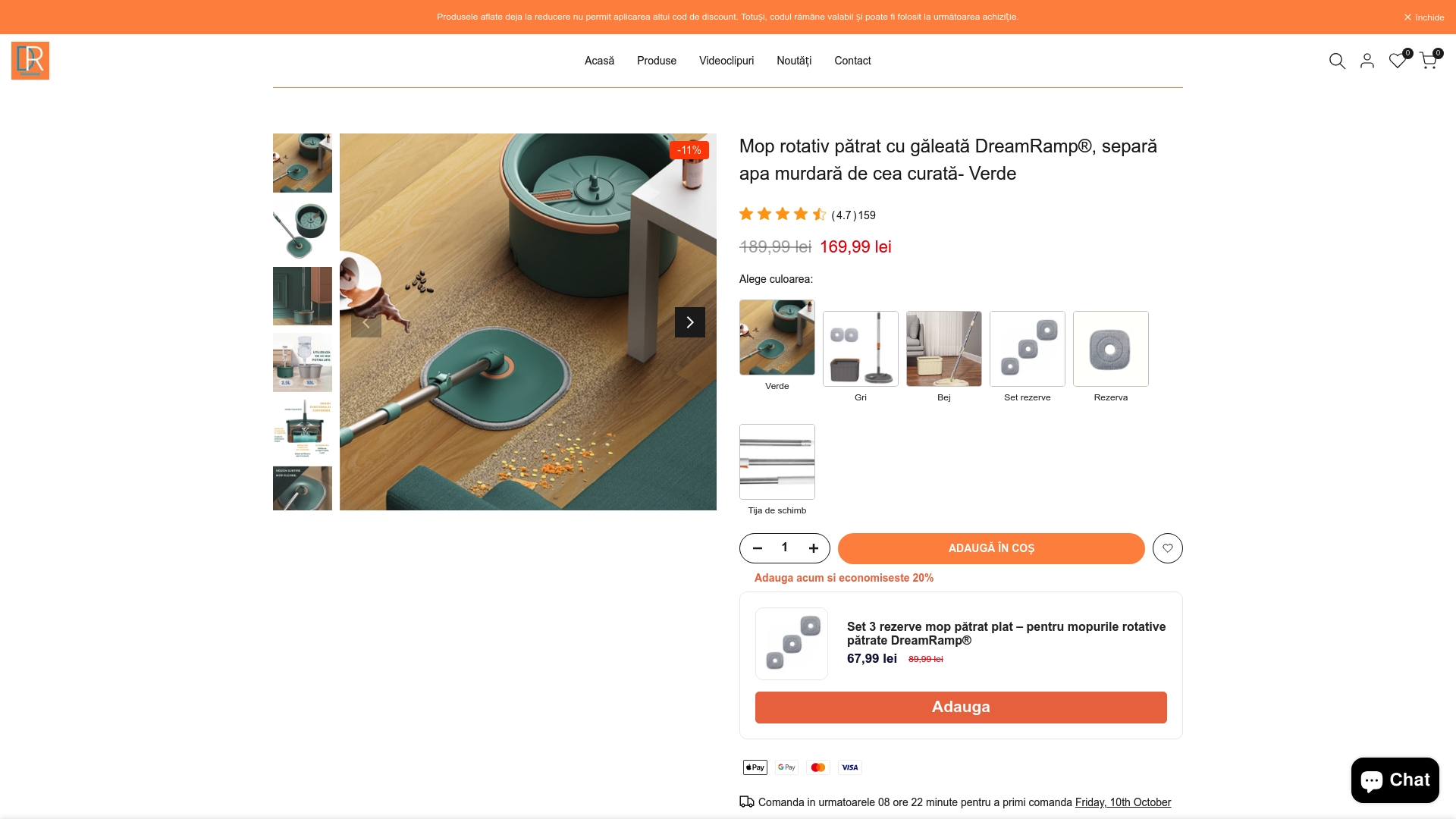
Don't delay the advantage of a basic set designed for efficiency and safety with every use. Discover the DreamRamp Rotary Mop , designed to separate dirty water from clean water, and save both time and resources. Complete your organization with specialized bathroom accessories and take advantage of the fast shopping experience directly on DreamRamp.ro . Choose now to enjoy perfectly organized cleaning, without stress.
Frequently Asked Questions
How can I effectively assess cleaning needs to organize my sets?
To effectively assess your cleaning needs, start by taking an inventory of the surfaces in your home and how dirty they are. Create a plan that includes the type of surfaces and any special cleaning requirements, such as disinfection. This will help you select the right products and save you time.
What products should I include in an effective cleaning kit?
An effective cleaning kit should include a multi-purpose mop, all-purpose cleaners, disinfectant solutions, and protective equipment such as gloves. Organize your products so they are easily accessible and purchase versatile products that can serve multiple surfaces. This will reduce the total number of products needed in the kit.
How can I organize a storage system for cleaning kits?
To organize an efficient storage system, use boxes and shelves to clearly compartmentalize cleaning products. Place cleaning kits as close as possible to frequently used areas and make sure they are accessible. Regularly review and rearrange storage to maintain efficiency.
What strategy should I apply for labeling cleaning kits?
Labeling of cleaning kits should be clear and specific, indicating the surface type and exact contents. Use different colors to differentiate kits and make sure labels are moisture-resistant. Update labels regularly to reflect the actual contents of each kit.
How do I use vertical space to organize cleaning kits?
Take advantage of vertical space by installing hanging shelves and cleaning tool racks. These solutions can increase storage space by up to 40%. Make sure the systems are easy to use and adaptable to your needs.
What procedures do I need to follow to discard expired products from cleaning kits?
Regularly review the products in your cleaning kits and remove any that are expired or no longer in use. Make sure to do a general cleaning of your cleaning kits at least once every six months to keep them organized. Store chemicals in accordance with local safety regulations.


